Why your customers don’t come back (and how to notice in time)
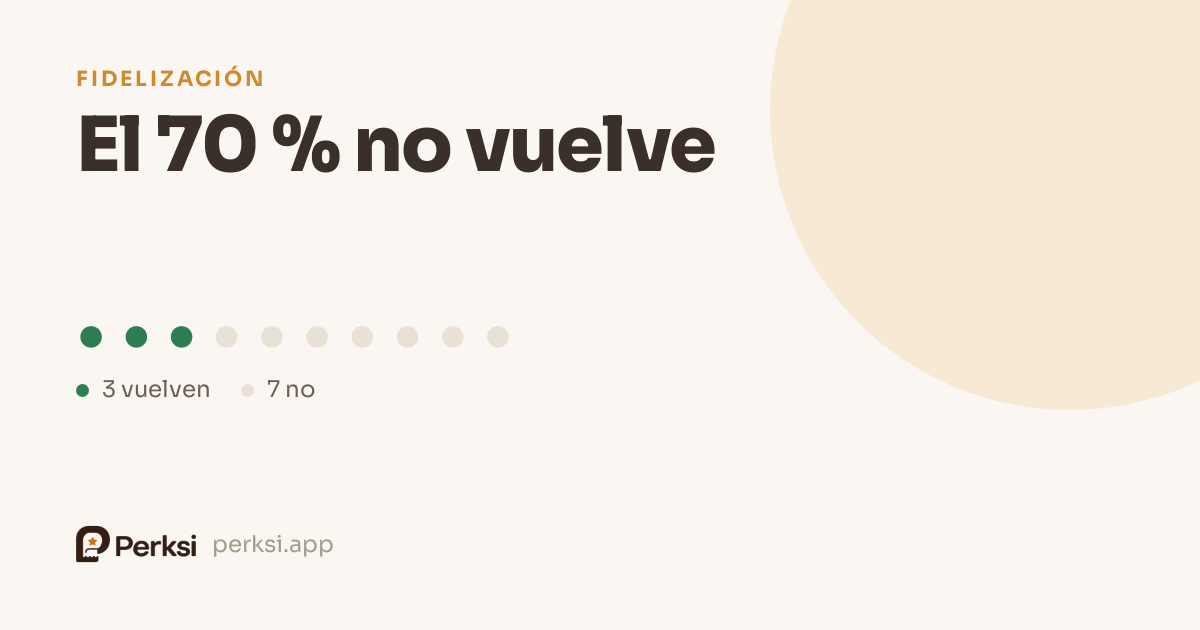
Around 70% of the people who walk into your place for the first time never return. Not because anything went wrong, but because nothing reminded them to come back.
A customer walks into your bar on a Tuesday. Has a coffee, enjoys it, pays and leaves perfectly happy. Complains about nothing. And never comes back.
Nothing bad happened. That is precisely the problem: nothing happened at all. Good or bad. And without a reason to return, the next time they want a coffee they will walk into whichever place is on their way.
The uncomfortable number
In hospitality and small retail, between 60% and 70% of new customers never repeat. Most owners guess far lower, because they only remember the ones who do come back: the familiar faces at the bar, the lunch-menu regulars, the usual crowd.
The ones who never returned, you don’t remember. By definition.
Meanwhile, winning a new customer costs five to seven times more than keeping one who already knows you. And yet almost the entire budget goes on winning: signage, social media, opening offers, local ads.
Why they really don’t come back
When you ask customers who stopped coming, the answers are rarely dramatic:
- They forgot. By far the number one reason.
- Their routine changed. New job, new hours, a different school run.
- They found somewhere more convenient. Not better: more convenient.
- Nobody gave them a reason. They never knew anything was waiting for them.
Notice that none of those four has anything to do with the quality of your product. Your coffee can be excellent and you can still lose 70%.
What you can’t measure, you can’t fix
The question almost no small business can answer is a simple one: how many of this month’s customers had been in before?
Without that figure you are flying blind. You can have a great month at the till and be bleeding customers at the same time, because takings don’t distinguish between a hundred people who come once and twenty who come five times. Same money, two completely different businesses.
The second one is far more solid: repeat customers spend more per visit, try more of your range and bring other people with them.
How to measure it in a normal business
You don’t need a degree or expensive software. You just need to be able to identify the customer at the point of sale. A loyalty card — the old stamp card, but digital — does exactly that: every time someone shows their card, a visit is logged with its date.
That alone answers questions you cannot answer today:
- How many active customers you have this month.
- How many are new and how many are repeat.
- Who used to come every week and hasn’t appeared for two months.
That last one is pure gold. A regular who has stopped coming is someone who already knows you, already liked you and simply drifted away. Winning them back costs a fraction of finding someone new.
What to do with that information
In a café or a bakery, where visits are frequent and the ticket is small, stamp cards work best: the tenth coffee is free. The customer knows they have seven stamps and need three more, and that makes them pick your counter over the one next door.
In a pizzeria or a restaurant, where people come every two or three weeks, points per euro spent work better, with a reward worth having: a dessert, a bottle, a discount on the next order.
In a dental clinic or a physio practice, where visits are spread out, the value is less about the prize and more about follow-up: knowing who missed their annual check-up and being able to remind them.
In a hair salon, something in between: a reward every few visits, plus a nudge to anyone who hasn’t been in for three months.
The detail that changes everything
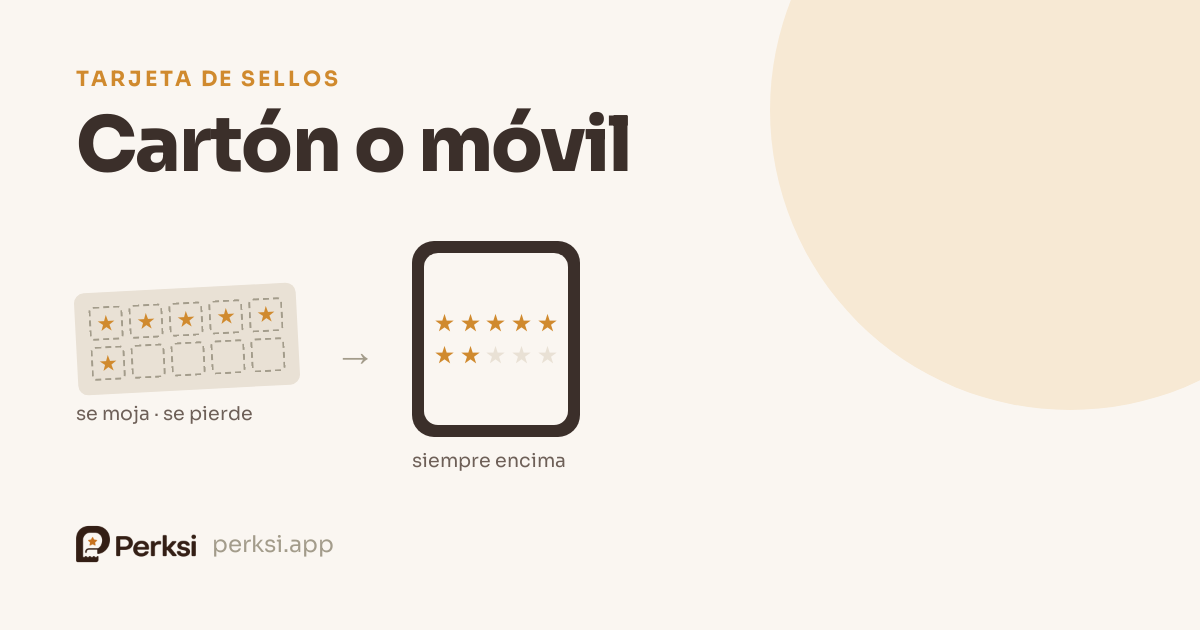
None of this works if the card gets lost. And cardboard cards do get lost: they go through the wash, stay in another coat, end up at the bottom of a bag.
That is why more and more small businesses have moved the card onto the customer’s phone. Not into an app — nobody is installing an app for your bar — but onto a web page they can save with one tap and always have to hand.
Where to start
If you measure nothing, start by measuring. Even for a month. Put up a digital card, let people sign up by scanning a code at the counter, and look at the numbers after thirty days.
Most likely you will get two surprises: you have fewer repeat customers than you thought, and winning back the ones who drifted away is easier than it looked.
Frequently asked questions
How many visits make a customer loyal?
It depends on the sector. In a café, from the fourth visit in a month the odds of them continuing rise sharply. In a restaurant, two visits in a quarter already counts as a repeat customer.
Isn’t it annoying to ask customers for their details?
If you ask them to fill in a full form, yes. If they scan a code, type their name and the card is theirs, no. The key is that signing up takes under twenty seconds and requires no installation.
What if my customers are older and not comfortable with phones?
You sign them up at the counter with their name and phone number, exactly as you used to write it in a notebook. The card exists, and either they check it or you show it to them.