Your cardboard stamp card is costing you money: 5 reasons
It worked for forty years, but it gets wet, it gets faked and it tells you nothing about your customers. What each card actually costs you, and how to fix it.
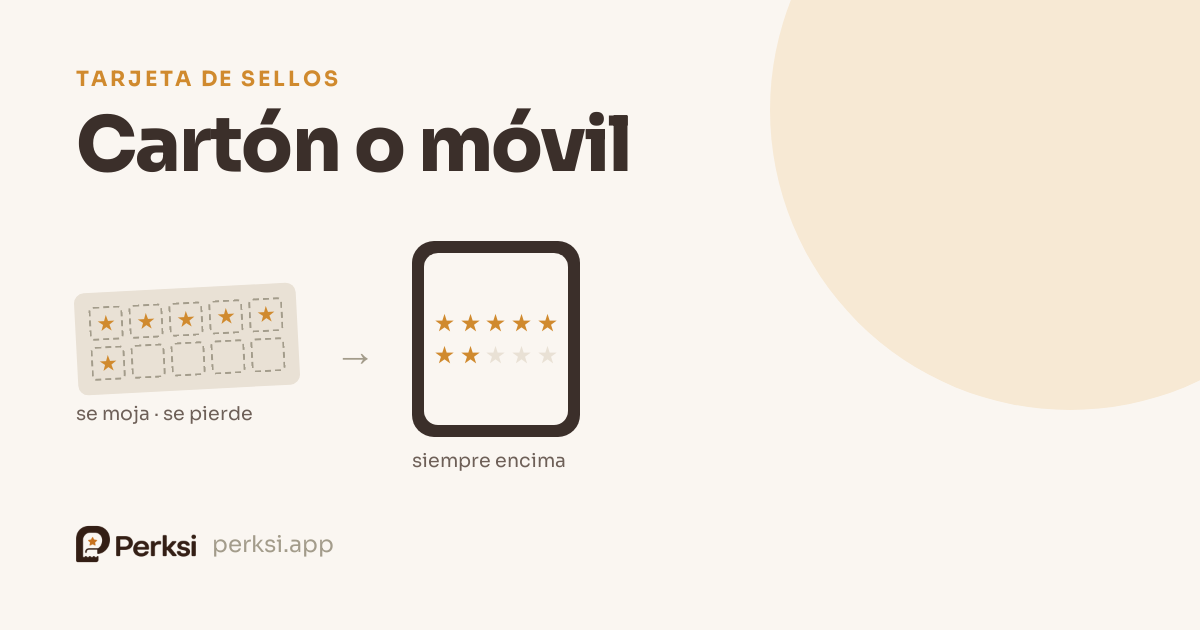
The cardboard stamp card is one of the best ideas local retail ever had. It is cheap, it needs no explaining and it works: people come back to complete it.
The problem isn’t the idea. It’s the cardboard.
1. It gets lost, and the customer goes with it
Ask anyone who works behind a bar: the most repeated sentence is “I’ve got it at home.” Followed by “I think I’ve lost it.”
A lost card isn’t just a piece of cardboard. It’s a customer who had six stamps, who was four visits from the reward, and who has just lost their reason to come back. Most won’t ask for a new one: they feel awkward, or they simply can’t be bothered.
Every lost card is a relationship cut off exactly when it was starting to work.
2. It can be faked with a two-euro stamp
A similar rubber stamp costs less than a coffee. And it doesn’t take organised bad faith: it’s enough for someone to help themselves to a couple of stamps “you owed me from the other day”.
It is rarely a financial disaster, but it is a silent leak that never shows up in any account, because there is no way to detect it.
3. It tells you absolutely nothing
This is the expensive problem, and the one almost nobody sees.
With cardboard, at the end of the year you don’t know:
- How many cards you handed out.
- How many were completed.
- How many customers come weekly and how many came once.
- Who was a regular and hasn’t appeared for two months.
You are investing in loyalty blind. If the scheme works, you don’t know how well; if it doesn’t, you don’t know either, and you keep printing.
Compare that with what you know about your drinks supplier: litres, prices, margins, terms. About the thing that matters most — who comes back — you don’t have a single number.
4. Every batch is a trip to the printer
Five hundred cards are cheap, but the real cost isn’t the printing: it’s remembering, ordering, waiting, collecting. And while they run out, there is a week when you hand out cards to nobody. Precisely to new customers, who need them most.
And if you change the design, the reward or the logo, you throw away whatever is left.
5. You can’t tell anyone anything
Your customer completes the card and doesn’t know until they look at it. You have a promotion on Thursday and no way to mention it. Someone hasn’t been in for three months and you can do nothing, because you don’t even have their name.
Cardboard is a mute medium. The conversation ends the moment the customer walks out.
What changes with a digital card
We are not talking about building an app. Nobody is going to install an app for your café, and anyone who says otherwise has never worked behind a bar.
We are talking about the card being a web page that lives on the customer’s phone:
- It doesn’t get lost. It’s on the phone, and nobody leaves their phone at home. If the link goes missing, it comes back with the same email or phone number.
- It can’t be faked. You give the stamps from your own screen. There is no rubber stamp to copy.
- It gives you data. How many active customers you have, how many repeat, who has stopped coming.
- It doesn’t run out. The counter code is printed once and that’s it.
- It lets you get in touch. If the customer gave you their email and agreed to it, you can write to them.
What doesn’t change
And this is the important part: the gesture stays the same. The customer shows their card, you give the stamp. Two seconds, exactly like the rubber stamp.
No changing your till, no new point-of-sale system, no new software to learn. Whoever is behind the bar presses a button that says “+1”.
What about my regulars?
That is the reasonable worry, especially if your customers are older.
Two practical answers. First: signing up means scanning a code and typing a name — twenty seconds, nothing to install. Second: anyone who isn’t comfortable, you sign up yourself at the counter with their name and phone number, exactly as you used to write in a notebook. The card exists even if they never look at it.
What to do this week
If you already have cardboard cards printed, don’t throw them away. You can run both for a couple of months: whoever has cardboard keeps using it, and new customers get the digital link. When the cardboard runs out, you simply don’t reprint.
It is the cheapest change you can make to your business with a direct effect on the customers you already have.
Frequently asked questions
How much does it cost to move a stamp card to digital?
Less than one batch of printed cards a year. Tools aimed at small businesses run between €8 and €40 a month depending on customer numbers.
Do I need wifi or special hardware?
No. The same phone or tablet you already keep at the counter will do, on normal wifi or mobile data. The camera only works over secure connections, which is standard today.
Can I keep the same reward I already had?
Yes, and you should. If your customers know “tenth coffee free”, don’t change it: change the medium, not the promise.